Grey Blending: The New Grey Area
For years, the arrival of grey hair came with a fairly predictable salon conversation. How do we cover it? That conversation is changing. Grey hair is showing up more openly across beauty media, social feeds and on celebrities and influencers, while grey blending has become the language for something many women were already looking for: a middle ground. Rather than automatically concealing every silver strand, colour can be used to work with the grey that’s naturally coming through.
You might still want most of your greys covered, but be tired of seeing a solid regrowth line a few weeks later. You might like some of the silver and want it to sit more naturally with the colour you already have. Or perhaps you’re thinking about eventually growing out your colour, but don’t particularly fancy spending the next year with a very obvious line between the two.
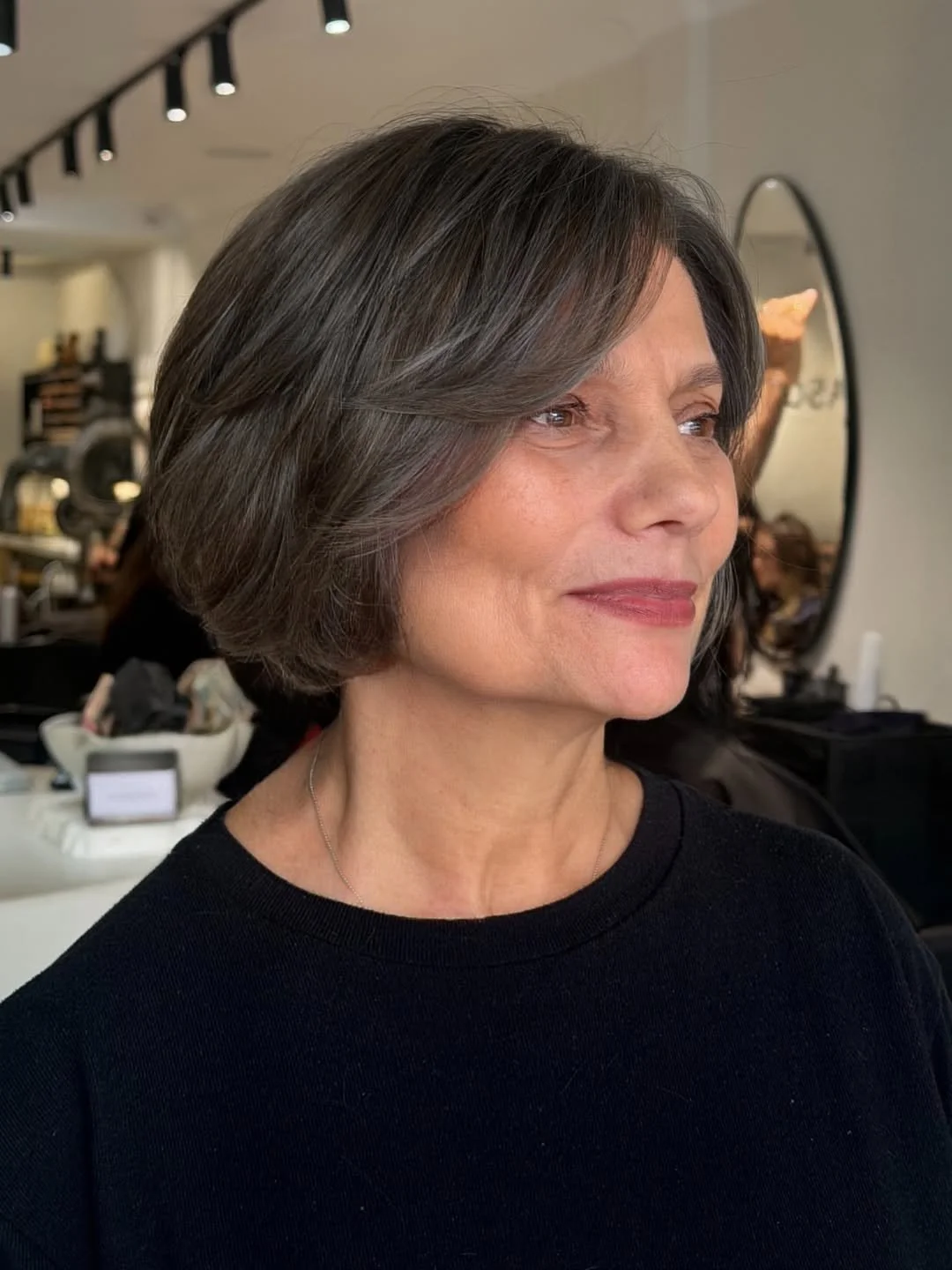
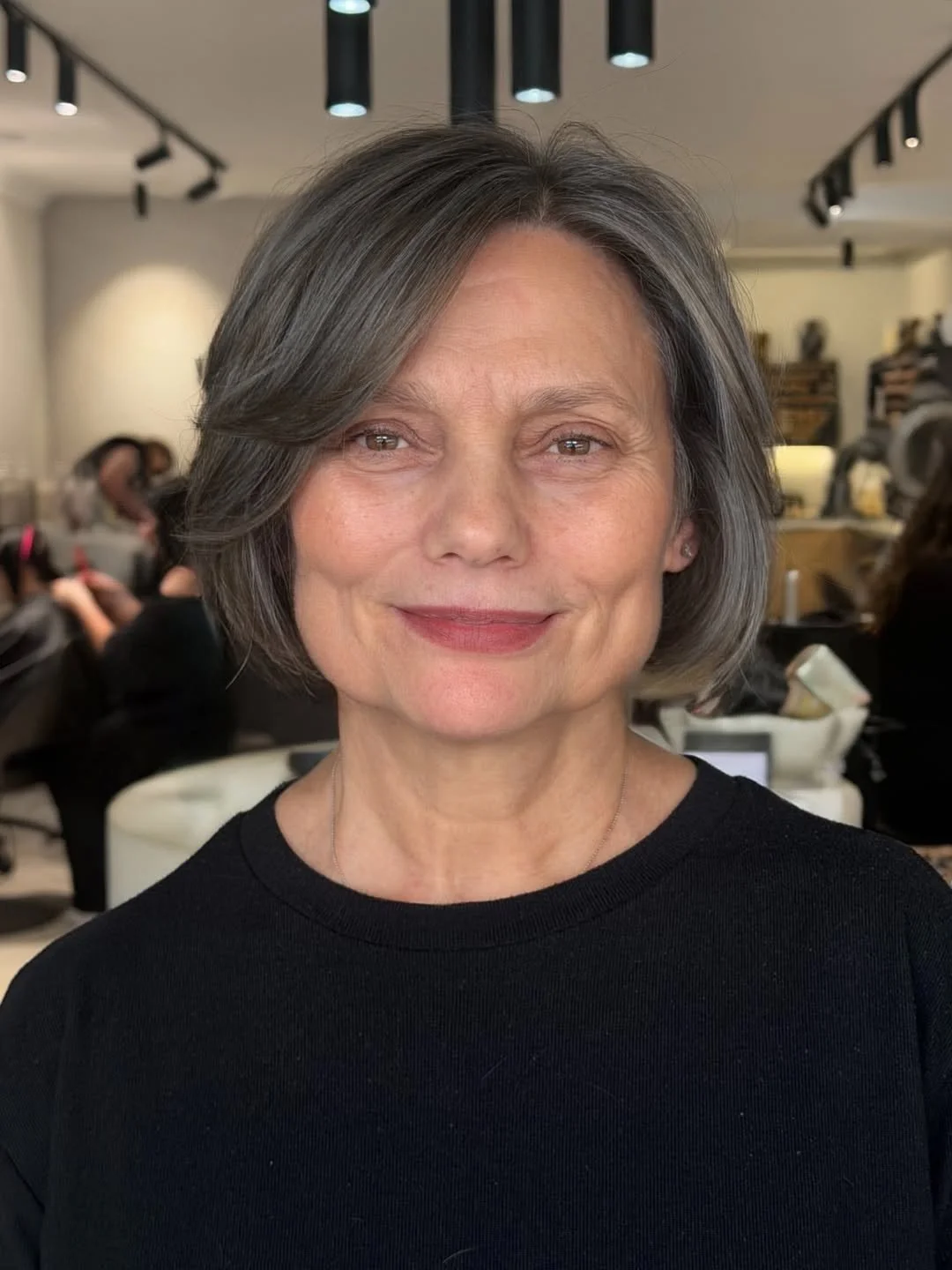
Techniques for Grey Blending
The name makes grey blending sound like a particular technique, but it’s really more of a colour strategy.
It starts with what your grey is actually doing. A few silver strands scattered through blonde hair are very different from dark hair becoming predominantly grey around the temples or part line. Your existing colour matters too, particularly if you’ve spent years using permanent colour through the lengths.
Then there’s the question that matters most: how much grey do you actually want to see?
Mason explains that when grey is coming through at the root, very fine foils taken close to the scalp can help those strands sit amongst lighter pieces. As the hair grows, the grey blends into that variation rather than appearing as a separate band against the colour.
For another client, the plan might involve keeping much more of the grey visible, softening existing colour through the lengths or continuing with full coverage because that’s still the look she prefers.
It’s also why the usual advice about “low-maintenance colour” can be misleading. Balayage is often described that way because more of the natural root is left untouched. If the root is exactly where your grey is most noticeable, however, leaving it alone may have you wanting another appointment sooner, not later.
Sometimes fine foiling closer to the root is the easier option. Sometimes full coverage is worth the more regular maintenance. It depends what you’re trying to maintain.
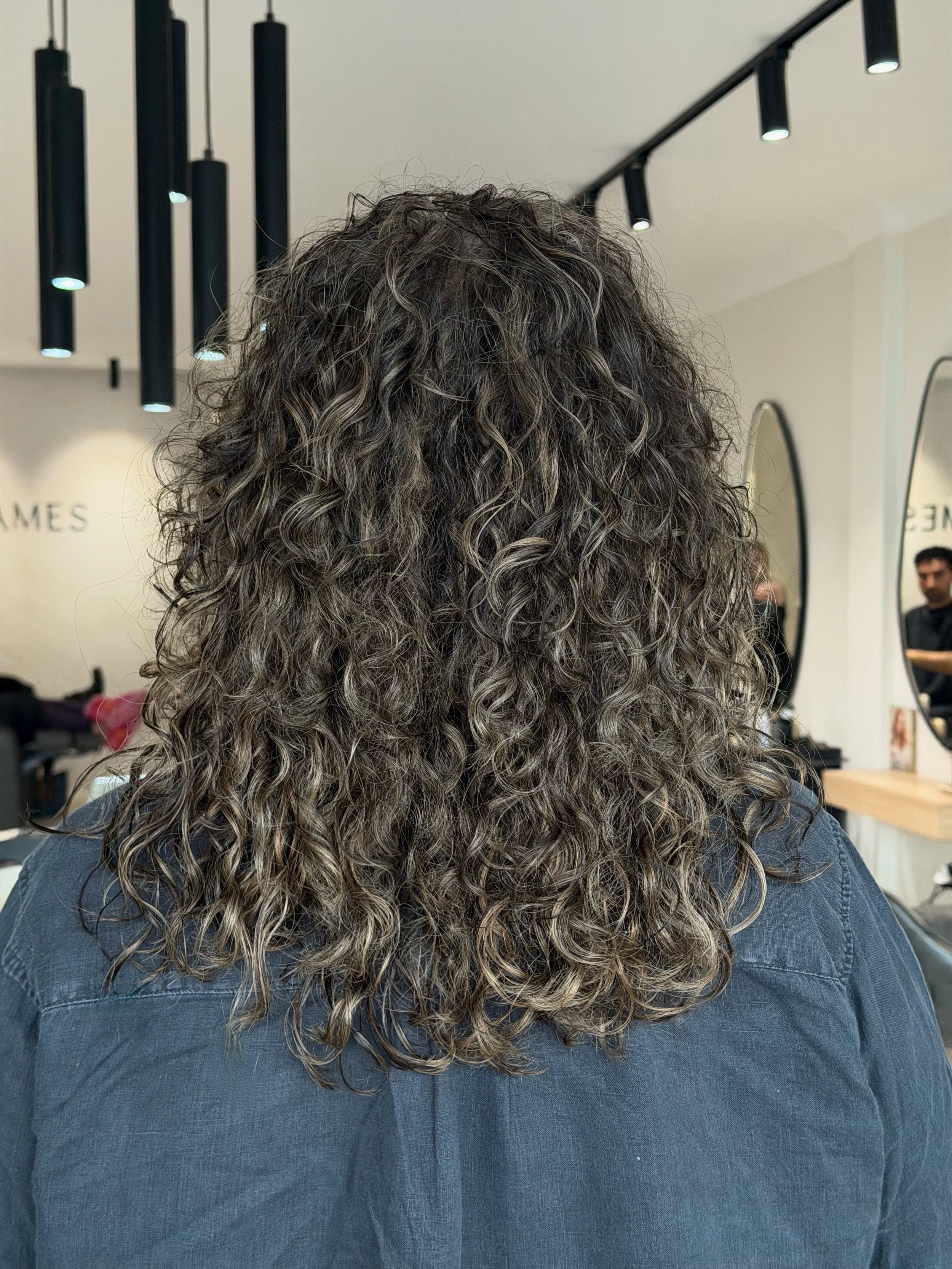
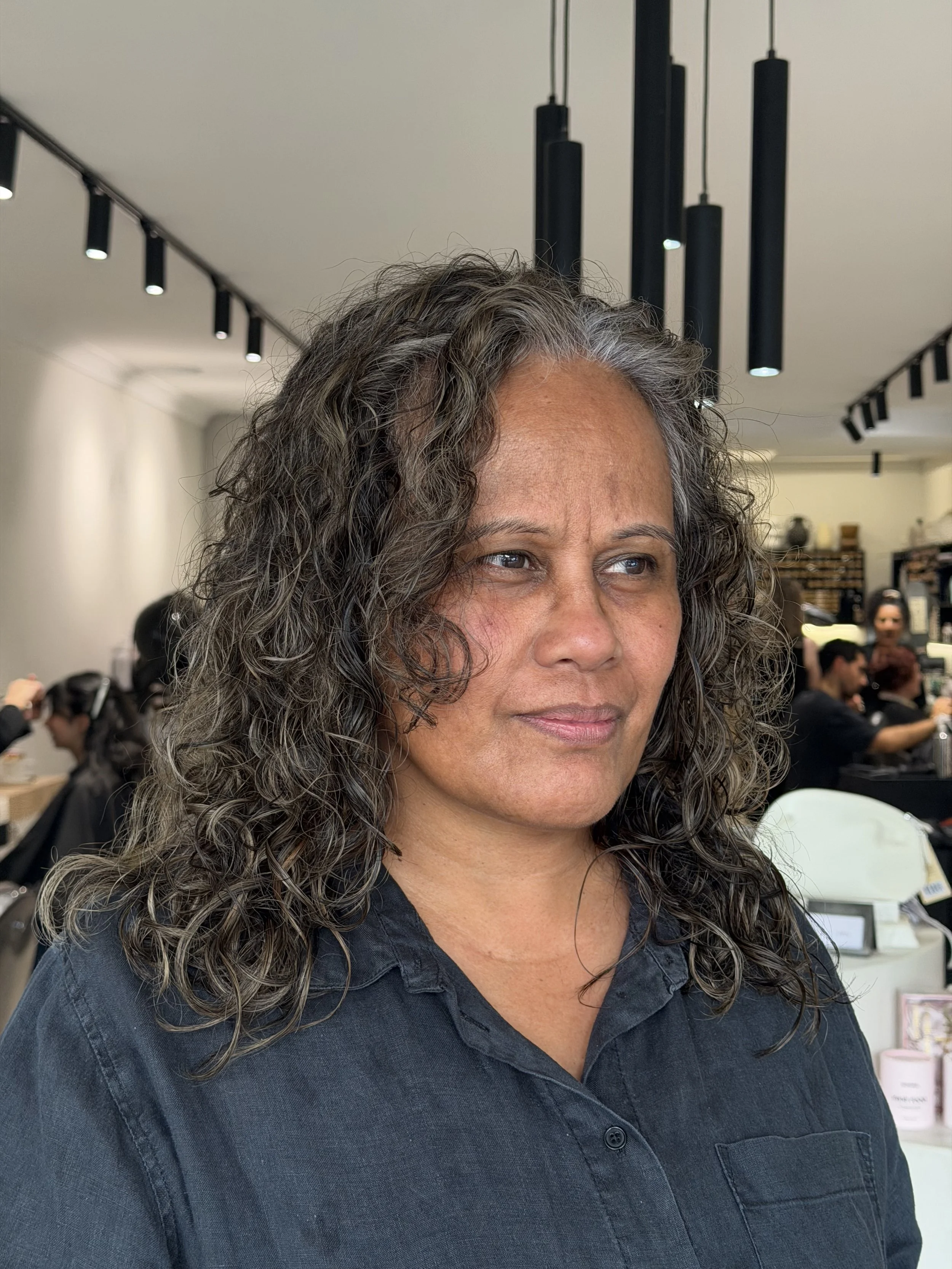
Your Hair Might Be Changing Too
Colour isn’t always the only difference people notice as their hair starts to grey.
Hair can change in texture and density as we age, and some people find the silver coming through feels different from the hair they’ve been used to styling for years. Suddenly the fringe doesn’t sit quite the same way, the hair feels harder to smooth or the products that have lived in the bathroom cupboard forever aren’t doing the job anymore.
That’s worth mentioning to your stylist.
The answer might be a different way of cutting the hair, a change to the styling routine or simply products better suited to what your hair is doing now. Grey blending can be part of the colour conversation without ignoring the fact that the hair itself may be changing too.
Keep the Future in Mind
Having more choices doesn’t mean the decisions you make now have no bearing on what happens later.
If you know you may eventually want to wear more of your natural grey, it’s worth telling your hairdresser before automatically reaching for permanent dark colour. Years of solid permanent colour through the lengths can make a later transition back towards natural silver considerably more involved.
That doesn’t mean you need a five-year hair plan. You might still decide that you want every grey covered today. But knowing that you’d eventually like a softer, more natural result gives your colourist something useful to plan around now.
You can cover the grey, soften it, weave it into the colour you already love or gradually let more of it show.